by Fatima Narvaez
In rock climbing, risk is immediate and ever‑present. Instead of signing a timesheet, we sign waivers. Instead of imagining consequences in the abstract, we stand on the side of a cliff where every decision must be the one that gets everyone home – on time and unscathed.
Climbers learn quickly that judgement, especially self‑judgement, is the enemy of effective execution. When you’re suspended on a wall, hesitation can be costly. Overthinking can be dangerous. And shame shuts down the very cognitive pathways required to solve problems under pressure.
A lot could go wrong, and this is why competent climbers regularly refresh their Rock Rescue skills. Much like first aid, these systems exist for the moments when things go wrong.
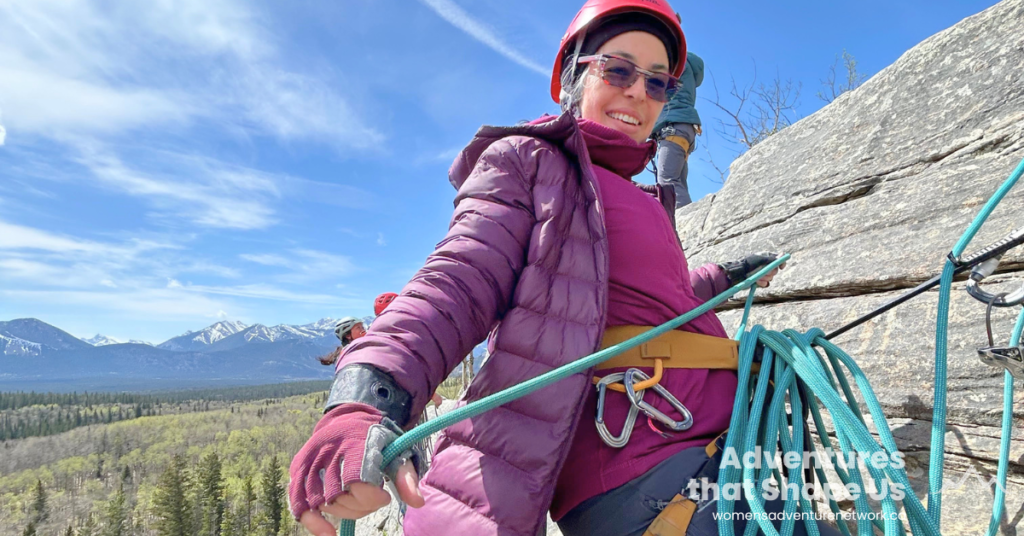
Last weekend, volunteers from Women’s Adventure Network completed a two‑day Rock Rescue course with Sarah Hueniken. What seemed to be complex systems became surprisingly intuitive, even for those who were new to the concepts.
I wanted to understand why.
Was it Sarah’s mastery? She is not only a world‑class athlete but a gifted educator. She teaches with clarity, intention, and a structure that feels both rigorous and accessible.
Was it the trust inherent in climbing? When you tie into a rope with someone, you’re literally connected. Many climbing partners create strong bonds as they put their lives on each other’s hands.
Was it the shared identity in the group – women who understand barriers, expectations, and the quiet pressure to “get it right” the first time?
Or was it something more fundamental: a judgement‑free environment where play was not only allowed but encouraged.
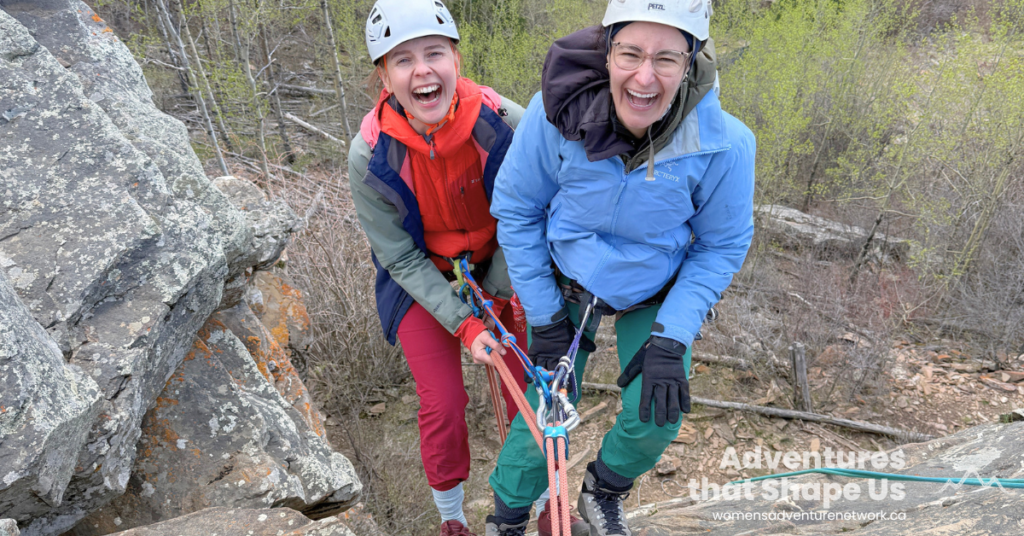
Because when we feel safe enough to laugh, experiment, and be imperfect, our brains shift into a state that accelerates learning. Neuroscience calls this relaxed alertness – the optimal zone for absorbing complex information and performing under pressure.
The success of our Rock Rescue weekend wasn’t just about learning complex technical systems. It was also the conditions that made learning possible:
- Alignment: Everyone understood the commitment and the purpose of the weekend. We came ready to learn, support each other, and nurture the culture we’re building at WAN.
- Trust: Two days together created a relaxed, supportive learning environment.
- Non‑judgement: Because we were not afraid to look foolish, we felt bold enough to try the new concepts – even if it took thinking out loud to a tree while problem-solving through a system.
- Authenticity: Showing up as ourselves – laughing, learning, fumbling, trying again – made the group more connected and engaged.
These values aren’t unique to climbing. They’re just as familiar in our 9‑to‑5 environments. They enrich both our careers and our passions when we adopt them.
"You don’t have to hang off of a cliff face to build trust in your team, but it can’t hurt - especially if you learned the right knots." - Patricia Kesler, WAN Volunteer